Context
Businesses today manage customer conversations across a sprawling set of channels: SMS, RCS, WhatsApp, email, social media, web chat. Jumping between a different tool for each one is a constant source of friction, and most companies would rather consolidate their communication stack than keep stitching separate providers together.
GoTo's omnichannel inbox answers that need: one place to handle every channel, run marketing campaigns, and organize the work across employees and teams, whether that means one shared inbox for the whole company or a dedicated inbox per team.
The challenge
The inbox shipped the day I started at GoTo, literally. It came out of a hackathon, not research, and the gaps that leaves behind don't surface until customers do.
Born from a hackathon
No research shaped the initial build. The team had no clear view of who the product should serve, SMBs, enterprises or mom and pop shops, or which role it served: customer support, sales or marketing.
No signal on product market fit
There was no way to tell whether the experience matched what users actually needed, or whether the product had found a market at all.
An ownerless product
Customers churned or never used it, complaints piled up with support, and the product team behind it left the company, leaving the engineer, researcher, designer and content writer as its de facto owners.
Product strategy
Moving into the product manager role alongside the engineer, I set out to build a product strategy grounded entirely in research, not in what the hackathon had assumed.
Segment the customer base
Segmented the current customer base by role, company size and industry to see where the product actually fit.
Identify the use cases
Identified the concrete use cases customers were hiring the inbox for.
Track adoption and churn
Tracked product adoption, activation, stickiness and churn to see exactly where customers dropped off.
Find the pain points
Identified the key pain points in the experience and the gaps against what customers actually needed.
Build a new vision
Built a new product vision for the inbox, grounded in what the research surfaced.
Research strategy
The evidence base that strategy stood on, built by a four person team with no legacy research to draw from.
Generative research
Interviewed current customers to map their use cases, needs, demographics, workflows, pain points and how they were actually using the product.
In-product CES survey
Implemented an in-product CES survey to track the score over time and recruit customers for continuous research.
Usability testing
Tested the current product's usability to identify friction in the experience and in the core flows.
Adoption dashboard
Built and implemented a Mixpanel dashboard tracking adoption from purchase through activation and usage.
Research results
What the research actually found, once the team went looking.
Inbox over campaigns
The value proposition that resonated most with leads and customers was the omnichannel inbox itself, not the campaign feature. IT admins at SMBs wanted to consolidate their communication stack into GoTo.
SMBs are the sweet spot
Most customers fell in the 10 to 100 employee range. Below that, owners already know what every employee is doing. Above it, enterprise customers needed capabilities the inbox didn't yet offer.
The workflow didn't match the experience
Reps had to claim a conversation before they could reply, and once claimed, no one else could see or answer it, so a customer went unattended the moment that rep went offline. The product also supported only a single inbox, when companies organized around multiple teams needed one per team.
Onboarding was broken
80% of customers never completed onboarding, so they never actually activated the inbox, yet believed they had. They complained to support that the product looked nothing like what they'd been sold.
Missing table stakes
The inbox lacked standard messaging features like keyword search and drafts, on top of more advanced ones like CRM integration, automations and AI generated replies.
Inbox 2.0 Experience
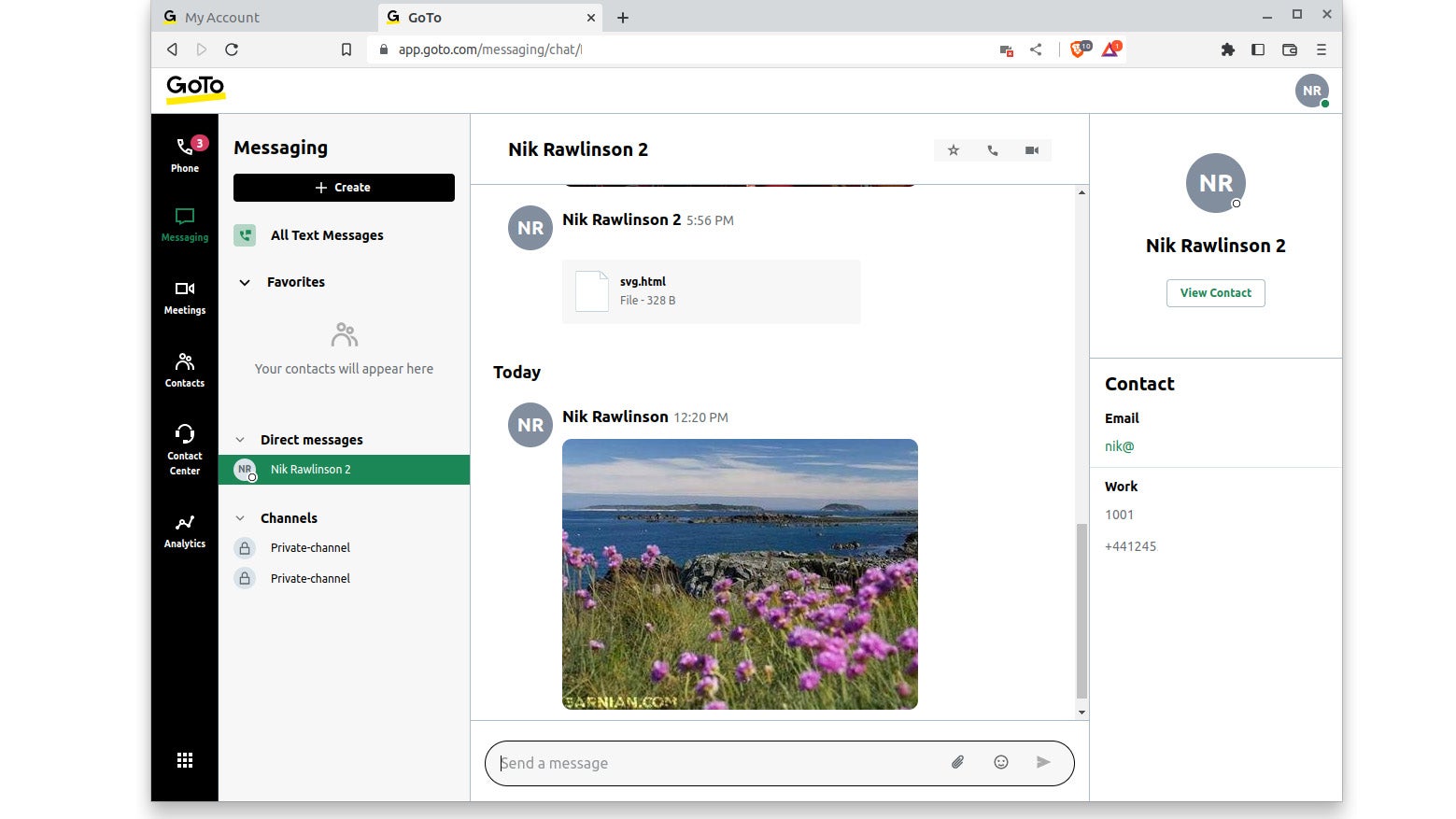
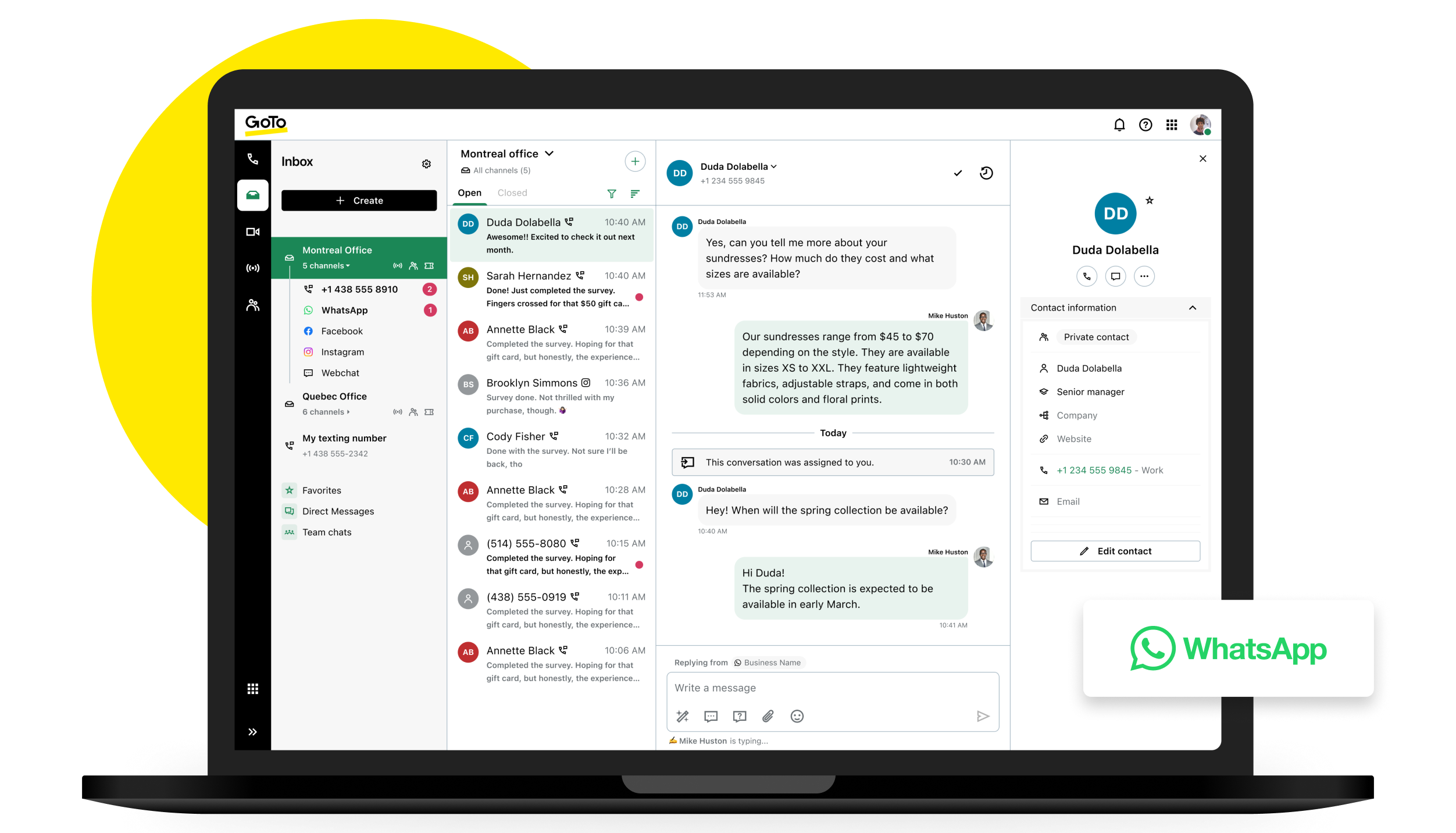
We doubled down on the inbox for SMB customers, built to help them deliver fast, high quality customer support and drive their sales efforts. Inbox 2.0 was built to:
Fix onboarding
Rebuilt the onboarding experience to be prescriptive and impossible to skip, walking users step by step from adding teammates to linking an existing phone number.
Ship what SMBs were missing
Multiple inboxes, moving a conversation between them, an open mode inbox that doesn't require a claim before anyone can reply, keyword search, conversation archiving, and support for large files, images and videos.
Lay the groundwork for CRM automation
Coordinated new CRM integrations with GoTo's integration team, identifying the CRMs that mattered most and paving the way for automations like logging texts straight into a CRM or triggering CRM workflows.
Bring sales and support along
Trained GoTo's sales team on the new experience and the research behind it to sharpen their pitch, and trained support on the inbox's new capabilities.
Business outcome
CES up 30%, churn down 18% within a year and a half.
The experience rebuilt from research went on to become a core capability across other GoTo offerings, helping the sales team close deals well beyond the inbox's original product line.
30%
improvement in CES score
18%
reduction in churn
18 mo
from relaunch to measured results
My deliverables
A product rebuilt on research, plus the artefacts that kept it that way past launch.
-
1.
Customer segmentation
Segmented the customer base by role, company size and industry, surfacing SMBs as the product's real center of gravity.
-
2.
Research repository
Generative interviews mapping use cases, needs, workflows and pain points across the customer base.
-
3.
Continuous research pipeline
An in-product CES survey paired with a standing interview loop for tracking sentiment over time.
-
4.
Adoption dashboard
A Mixpanel instrumentation of the funnel from purchase to activation to usage, surfacing the 80% onboarding drop-off.
-
5.
Inbox 2.0 roadmap
The onboarding rebuild, multiple inboxes, the open mode inbox, search and archiving, and the CRM integration groundwork.
-
6.
Sales and support enablement
Trained GoTo's sales and support teams on the new experience and the research behind it.
Want the detail this page leaves out?
Get in touch