Context
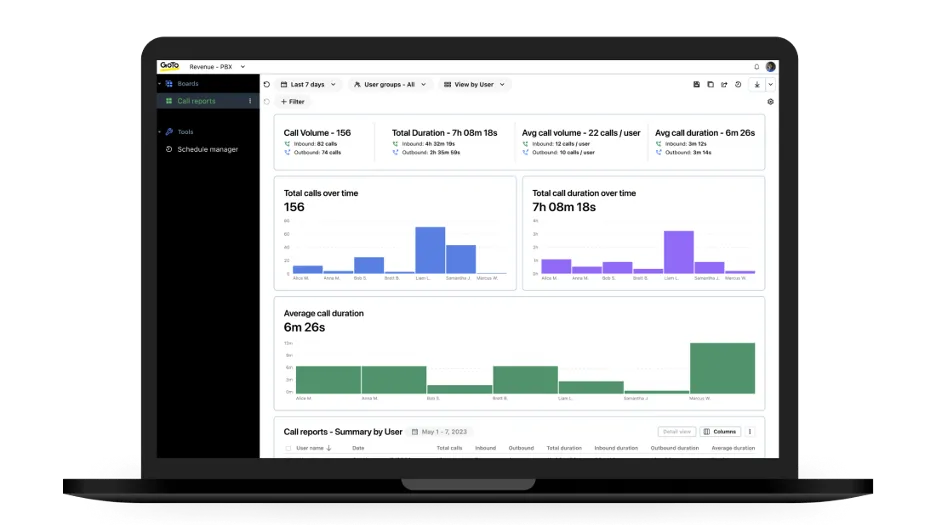
Analytics is how SMBs and enterprises alike judge their own health: which lead-generation channel actually works, how a team is performing day to day, where the business is trending. GoTo's communication platform already gives business owners and managers visibility into their team's activity: calls made, calls missed, response times, helping them separate hot leads from cold ones and sharpen customer support and sales. That analytics layer is core to GoTo's offering, and increasingly, to whether GoTo wins the deal at all.
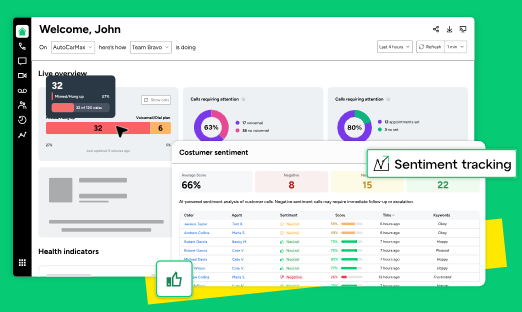
But clients don't want to build KPI dashboards, and they don't have time to drill into every metric to find what matters. Research I ran across personas in the automotive industry surfaced something sharper: with AI setting the bar, users now expect the product to do the drilling down for them and hand back a notification: what's going wrong, why it matters, and what to do about it, delivered straight into their hands. GoTo needed an analytics experience built around that expectation instead of another dashboard to configure. That's the brief behind CX Insights: an AI-powered analytics page delivering key insights, next steps and context directly to users.
The challenge
The research behind CX Insights was conducted in one vertical. Turning it into a company-wide release, on a hard deadline, raised three problems at once.
A scope that outgrew its research
Nobody at the top set out to target every kind of business, of every size. The scope grew because more teams and stakeholders kept getting pulled into the initiative, each one pushing to have their segment covered, until "automotive" quietly became "everyone."
Design by committee
The same crowd that stretched the scope also had to agree on every decision inside it. More stakeholders meant slower calls and a lot more friction to get any single one made.
$5M and one competitor to beat
GoTo's investors put in an extra $5 million to hit a 7-month release target, tied to one non-negotiable goal: beat automotive analytics competitor CallRevue.
Product strategy
Define and ship a product strategy built to win the CallRevue comparison from the first release, then keep closing the gap to the full vision, holding one clear north star while getting seven teams shipping toward it without stalling on consensus.
Win against CallRevue
Close the feature gaps identified through competitive analysis and research, and build a targeted experience it can't match.
Create the target experience
Map a blue sky vision grounded in GoTo's current product offering: the best experience GoTo can realistically build toward.
Define a winning MVP
Define an MVP that wins against CallRevue from day one.
Plan phase 2 & 3
Close the gap between the MVP and the target experience with a clear post-launch roadmap.
Track and pivot
Monitor sales, adoption and activation post-launch, and adjust the roadmap on what the data shows.
Problem
With 3 engineering teams, 2 design teams and 2 product teams now on the initiative, a decision that used to take a conversation took a meeting, and every meeting added people instead of resolving anything.
Solution
We anchored every team on one target experience and one MVP scope, then gave each team a single lane to own end to end, turning open-ended debate into a scoped sign-off.
Research strategy
The evidence base the product strategy stood on, built to hold up across a scope that had just tripled in size.
Feature-gap discovery
Identified feature gaps and opportunities through user interviews across the widened set of businesses.
Adoption drivers
Identified the essential functionality needed to optimize adoption and activation, not just feature completeness.
Use cases & workflows
Mapped key use cases and workflows per persona, across company sizes.
Design validation
Tested design iterations before they shipped, catching friction ahead of release.
Beta program
Launched and maintained a beta program with early access users, delivering weekly insight summaries to the wider team.
Research results
What the interviews actually surfaced, and what shaped every scoping decision that followed.
Real-time over historical
Real-time data is what lets teams be proactive instead of reactive. Historical data still matters, but only for tracking and reporting on what already happened.
Every missed touch costs a dollar
For a car dealership, an unanswered text, call, chat or voicemail is a lead or a deal walking out the door. Knowing exactly who needs a callback, and now, is the job.
Act in real time or lose the customer
Customer satisfaction and team performance have to be acted on as they happen, not reviewed after the lead or the customer is already gone.
Meet users where they already are
End users don't check GoTo on their own initiative. Insights only land if they're pushed through phone and/or email notifications.
Context is what makes an insight trustworthy
A real insight is a measurement, the context behind it, and the next step. Without context, users don't trust what the AI is telling them.
CallRevue's edge: opportunity metrics
CallRevue's strongest advantage over GoTo is the appointment and deal opportunity metrics it already provides.
Target experience
Led brainstorming sessions with designers and engineers to map the intended experience, weighing feasibility, engineering effort, the discovery research findings, and the constraints of GoTo's design system. The target experience was built to:
Surface what needs attention
Every insight pairs a metric with the real time business context behind it, plus a clear next step. For example: a spike in missed calls from the service team because four of ten agents are logged out of the phone system, and the seven leads and customers who need a callback.
Notify users in real time
A notification system alerts users the moment something needs attention, so they can act while it still matters.
Track the essential business metrics
The core KPIs customers already use to gauge business health and operations, from customer satisfaction and sentiment to team performance, conversions and missed opportunities.
Show the full picture, not just the count
A metric also carries whether it has already been acted on. Knowing how many calls were missed matters less than knowing how many still need a callback, so a sales rep knows exactly who to reach.
MVP scope
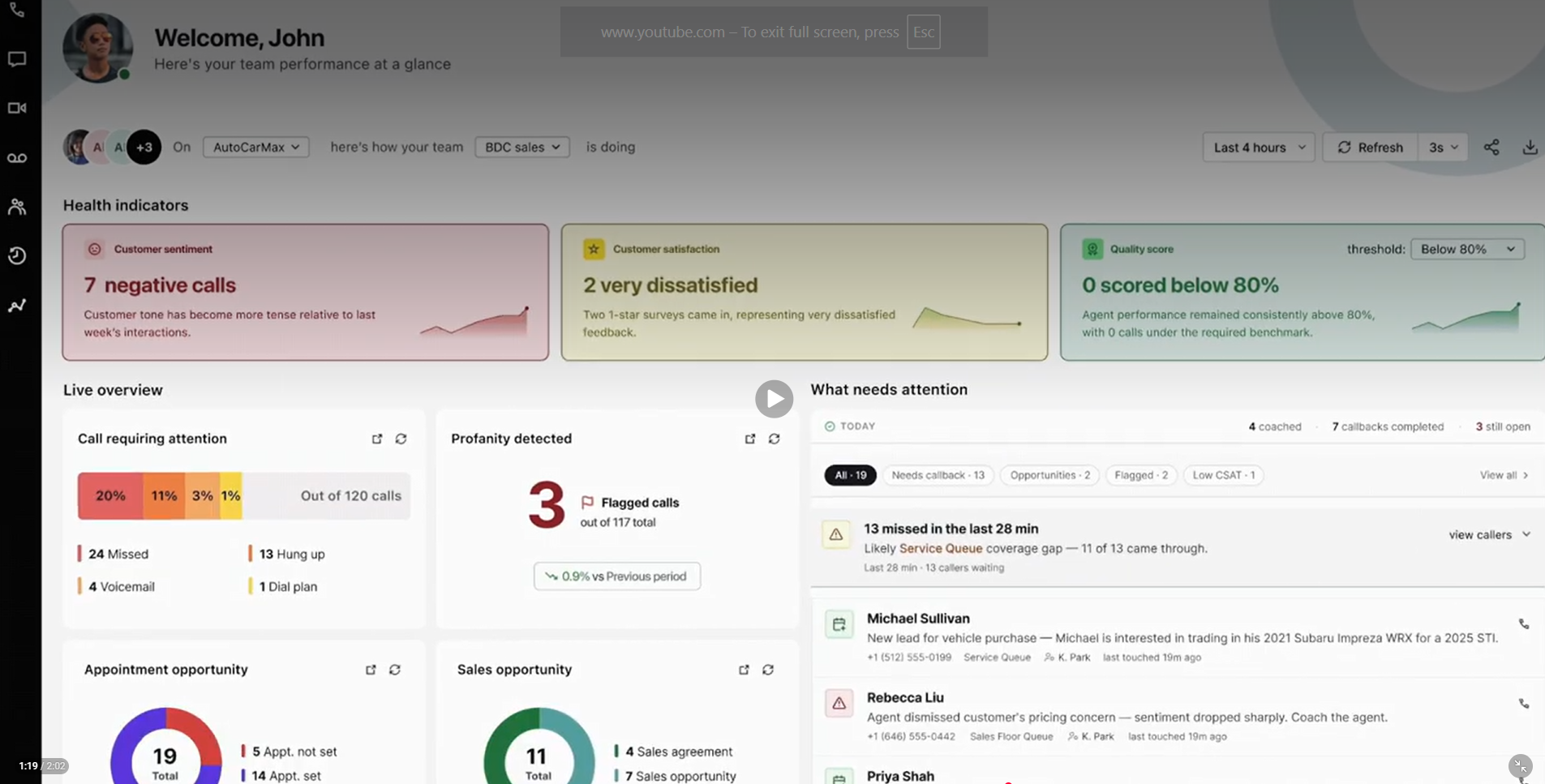
Every line of the MVP traces back to a research finding: match CallRevue where it actually wins, replace the reactive habit of checking a historical dashboard, and get the message in front of users without waiting for them to log in.
1.
CallRevue feature parity
Appointment and deal opportunity metrics and insights, closing GoTo's single biggest gap against the competitor.
2.
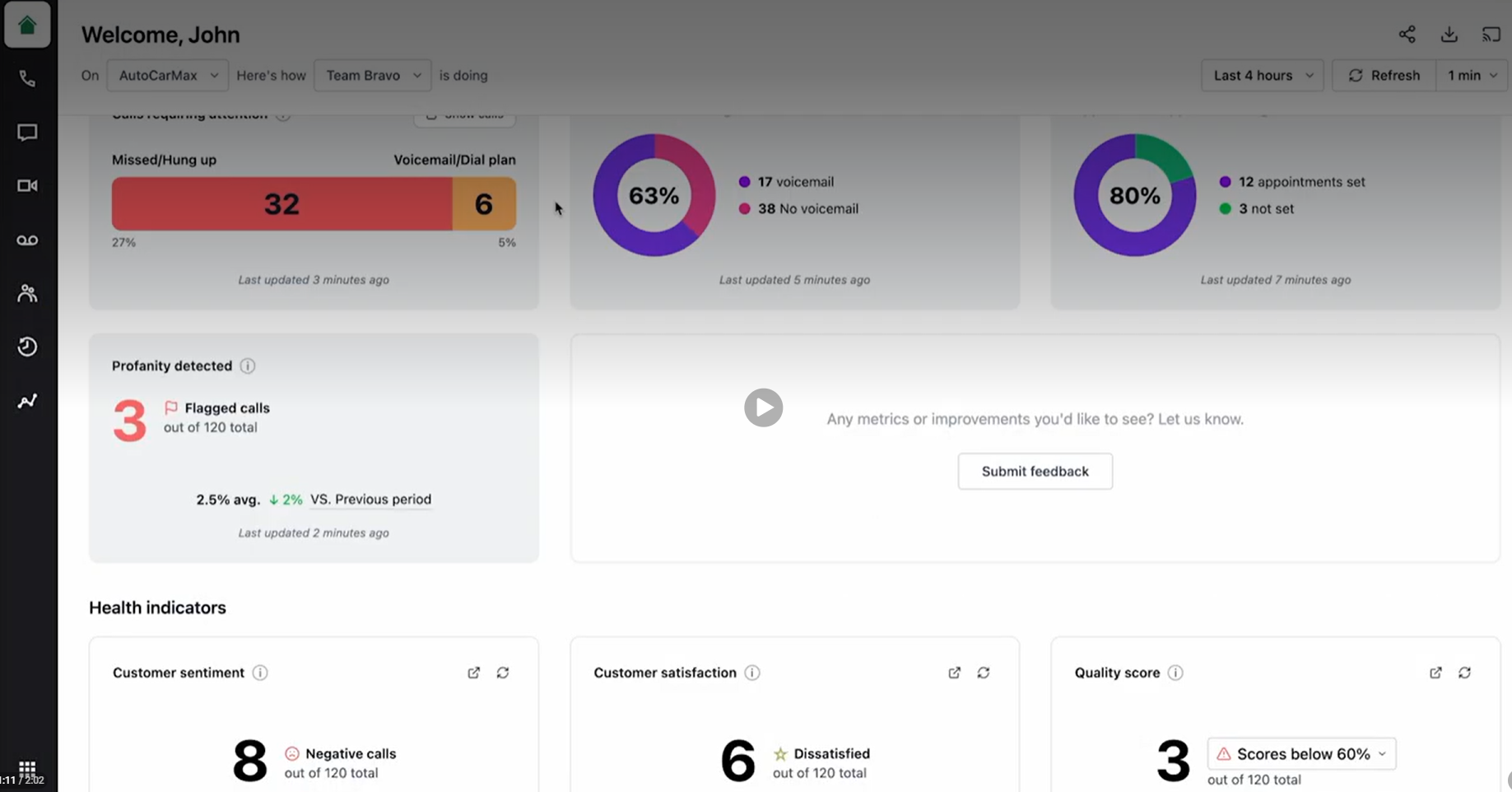
Real-time dashboard
A new "Home" experience that sits alongside the existing historical dashboard instead of replacing it.
3.
Key metrics
Missed calls, unread voicemails, missed appointment opportunities and deals, and customer health metrics, in one place.
4.
Foundation for AI insights
New endpoints and richer API data, laying the groundwork the recommendation layer needs for phase 2 and phase 3.
5.
Email notifications
Getting insights in front of users who don't log into GoTo on their own initiative.
Beta program
Live since June 3rd, 2026, ahead of the October 2026 general release.
1. Recruit & onboard
Early access customers spanning the widened range of businesses, of every size, chosen to stress-test the MVP beyond the original research base.
2. Weekly insight summaries
Beta feedback synthesized into a standing weekly readout for product, design and engineering leadership.
3. Feed the roadmap
Beta signal shaping what stayed in the MVP and what moved into phase 2 and phase 3.
Where the program stands
Beta live since June 2026, general release on track for October 2026.
Weekly insight summaries from the beta cohort are feeding directly into the phase 2 and phase 3 roadmap ahead of general availability.
7 mo
from kickoff to general release
Jun 2026
beta program launched with early access customers
7 teams
across product, design and engineering aligned to one MVP
My deliverables
A scoped, shipping product, plus the artefacts holding the strategy together across seven teams.
-
1.
Competitive teardown vs. CallRevue
A feature-gap matrix that directly informed the MVP scope and the phase 2 & 3 roadmap.
-
2.
Target experience & MVP definition
The north-star vision, and the phased plan for closing the gap to it after launch.
-
3.
Cross-functional alignment model
A governance model across 3 engineering, 2 design and 2 product teams that turned committee debate into scoped ownership.
-
4.
Personas & workflows across businesses
Use cases and key workflows mapped per persona, across the widened range of businesses, of every size.
-
5.
Beta program
Recruitment, weekly insight readouts, and the feedback loop feeding the post-MVP roadmap.
-
6.
Adoption tracking plan
Instrumentation to monitor sales, adoption and activation post-launch, and pivot the roadmap on the signal.
Want the detail this page leaves out?
Get in touch